koʻu moʻolelo · ang aking kuwento
Why I started this current.
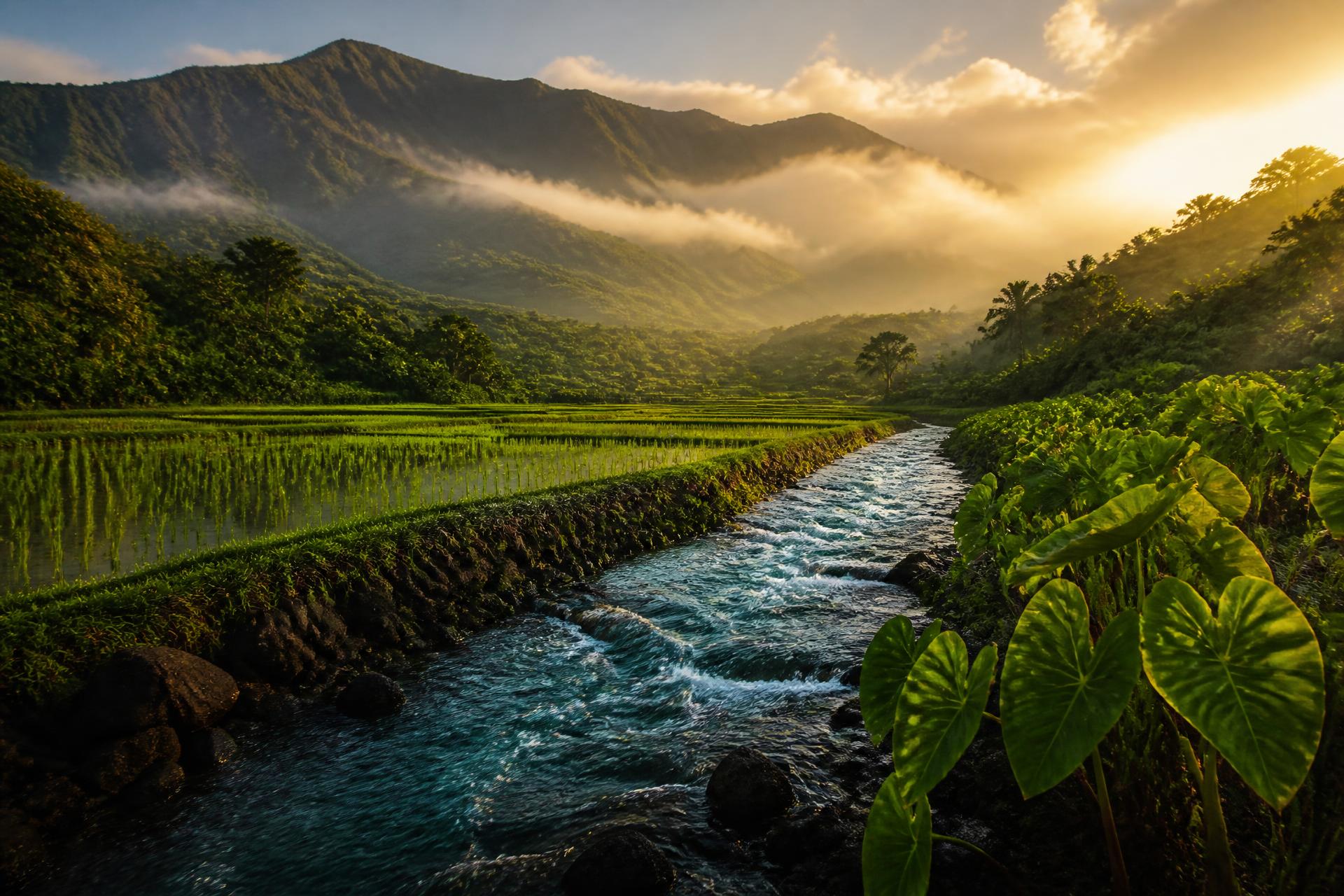
I grew up hearing two different songs about the same water. My Hawaiian kupuna spoke of wai as the source of wealth, memory, and kuleana. My Filipino grandparents spoke of agos as the unstoppable force that carved the rice terraces of the Cordilleras and carried the sakadas across the Pacific to cut cane in these same valleys. Both songs taught me that water is not a commodity. It is a relationship.
For years, those songs felt separate. At the hearing table, I watched Hawaiian families testify in ʻōlelo Hawaiʻi and Filipino families testify in Ilocano, while the same plantation-era lawyers translated their urgency into dry permit language. The divide was not a lack of care. It was a lack of shared space, shared vocabulary, and shared power.
In 2015, after yet another contested stream-flow case on the windward side of Maui, I sat in the parking lot with Auntie Laarni and Uncle Kalani. We did not agree on every detail. But we agreed on one thing: the next generation would not inherit the same split room. That night, WAI AGOS was born — not as a committee, but as a promise to carry both currents forward together.
I am not a lawyer. I am not a scientist. I am a daughter of two streams that were told they could not meet. I am doing this because the water that fed my grandmother's taro patch is the same water that fed my lola's rice dreams. When we fight for it together, we do not just restore a stream. We restore a story.
"Two words for water, one current. I am only here to keep the flow moving."
This work is not about me. It belongs to every family who has ever watched a stream go dry and felt the silence where fish used to splash. If you are one of those people, no matter which island your ancestors called home, you are already WAI AGOS.
What guides me
The commitments I hold.
Listen first
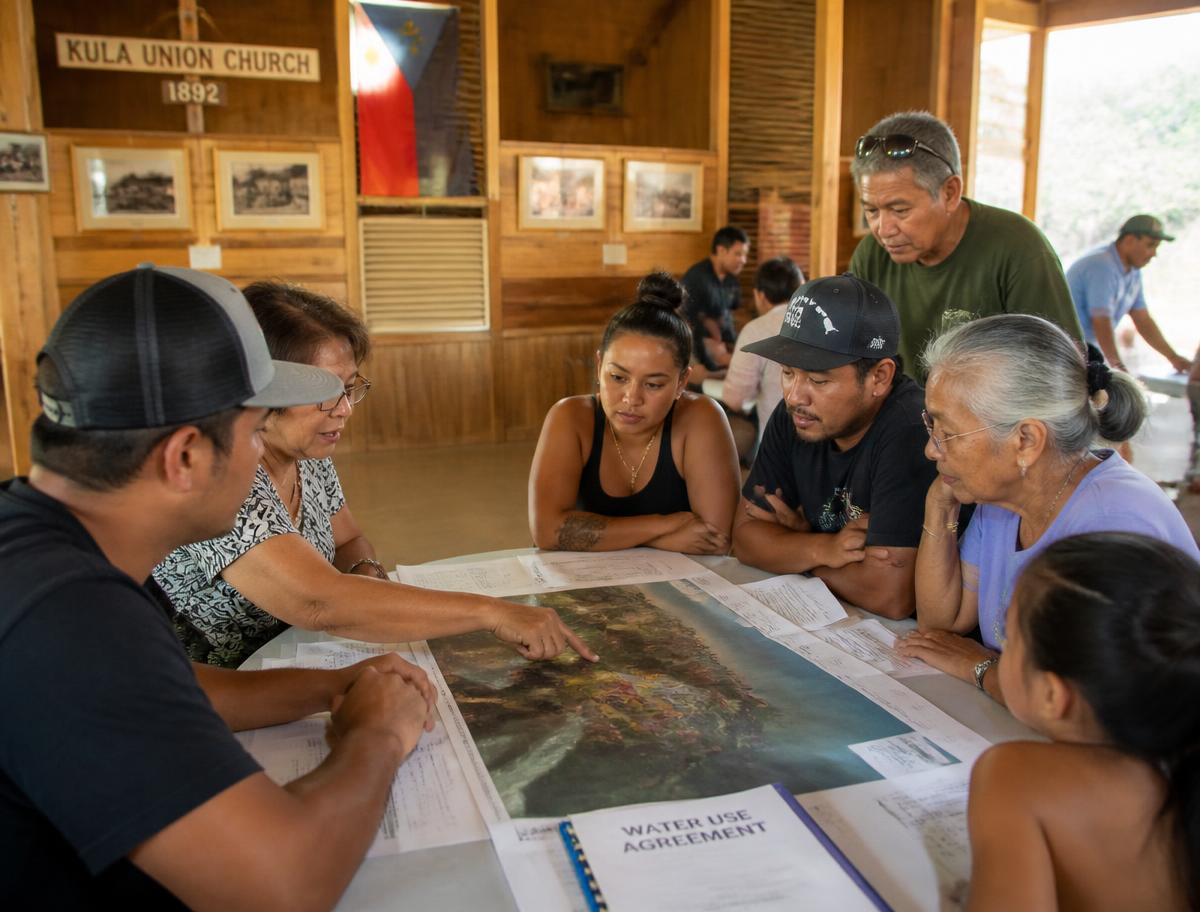
The answers live in the community halls, not in my own assumptions. Every decision starts with talk story.
Translate power
Permits, stream gauges, and hearing rules are not magic. My job is to make them plain so anyone can act.
Honor both ancestries
Hawaiian and Filipino ways of knowing are not competitors. They are the twin roots of our water memory.
Act with patience
Water cases are slow. Coalition building is slower. I am here for the long, steady current.
Share the table
The table I build must have room for farmers, elders, students, and the next generation of testimony writers.
Protect the future
What we do now determines whether our children will know what a living stream sounds like.